


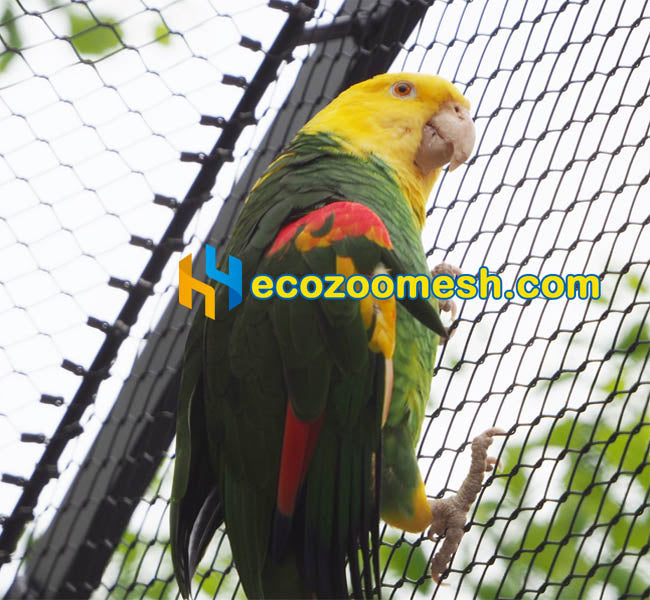

Black Oxidized Stainless Steel Rope Mesh: The Professional’s Choice for Zoo & Commercial Aviary Projects
Introduction: Why Material Selection Matters for Professional Aviculture
For zoo procurement managers, aviary design firms, and commercial construction teams, selecting the right enclosure material is a high-stakes decision—one that impacts budget efficiency, regulatory compliance, animal welfare, and long-term operational costs. Professional aviculture projects (whether zoo exhibits, public aviaries, or conservation facilities) demand materials that balance structural performance, safety, and scalability, while meeting strict industry standards for animal care.
Traditional enclosure solutions—galvanized steel, welded wire mesh, or plastic netting—often fail to address the unique challenges of commercial projects: frequent replacement due to corrosion, liability risks from animal injuries, or costly maintenance. Black oxidized stainless steel rope mesh has emerged as the definitive solution for professional stakeholders, engineered to meet the rigorous demands of zoo operations and large-scale aviary construction. This article breaks down why it’s the preferred choice for decision-makers prioritizing durability, compliance, and value.
Chapter 1: Material & Manufacturing: Engineered for Commercial-Grade Performance
1.1 Industrial-Grade Stainless Steel: 304 vs. 316 for Project-Specific Needs
Professional aviary projects require materials tailored to environmental conditions and usage intensity—and black oxidized stainless steel rope mesh delivers with two industry-proven grades:
304 Stainless Steel: Ideal for indoor aviaries, temperate outdoor exhibits, or low-humidity regions. Complies with ASTM A480 standards for corrosion resistance, making it suitable for zoo habitats housing small to medium birds (songbirds, parakeets) with moderate waste output.
316 Marine-Grade Stainless Steel: Mandatory for coastal zoos, tropical exhibits, or large bird enclosures (macaws, raptors) with high corrosive waste. Infused with molybdenum, it meets ISO 9001 quality requirements for salt spray resistance, eliminating rust even in harsh environments (e.g., coastal Florida, Southeast Asia).
Both grades are sourced from ISO-certified mills, ensuring consistent tensile strength (≥500 MPa) and structural uniformity—critical for passing zoo safety inspections and load-bearing requirements.
1.2 Black Oxidation: A Compliance-Centric Finish
For procurement teams focused on animal welfare regulations (e.g., AZA, EAZA standards), the mesh’s oxidation process is a key differentiator. Unlike paint or powder coatings (which chip and release toxins), the chemical oxidation penetrates the steel substrate, creating a permanent, non-toxic matte black finish. It’s certified lead-free, VOC-free, and compliant with REACH regulations, eliminating liability risks from bird ingestion or skin contact.
The finish also meets aesthetic guidelines for zoo exhibits: its low-reflective surface reduces visitor glare (improving exhibit visibility) and mimics natural habitats, aligning with modern zoo design principles that prioritize animal enrichment and guest experience.
Chapter 2: Core Advantages for Professional Stakeholders
2.1 Cost Efficiency: Longevity That Lowers Lifecycle Costs
Zoo procurement teams and construction firms prioritize materials that reduce total cost of ownership (TCO)—and this mesh delivers:
30+ Year Service Life: Outperforms galvanized steel (5-8 years) and welded mesh (10-15 years) by 2-3x, eliminating frequent replacement costs. For a 1,000 sq. ft. zoo exhibit, this translates to $15,000+ in savings over 20 years (based on average material and labor costs).
Low Maintenance: The non-porous surface resists bird waste, mold, and debris. Routine cleaning requires only water and veterinary-grade disinfectant, cutting janitorial costs by 40% compared to porous mesh alternatives.
Warranty Coverage: Most suppliers offer a 10-year manufacturer’s warranty (extendable to 15 years for 316 grade), providing peace of mind for long-term projects.
2.2 Structural Reliability: Engineered for Large-Scale Projects
Aviary construction teams need materials that adapt to complex designs and meet load-bearing standards:
Seamless Modularity: Panels can be customized up to 30’ x 60’ (no seams), reducing installation time by 30% for large exhibits. Compatible with steel frames, concrete posts, and tension systems, it supports spanning widths up to 50’ without intermediate supports—ideal for walk-through aviaries or multi-species habitats.
Impact & Peck Resistance: Hand-knotted diamond weave (10-20 knots per sq. ft.) distributes force evenly, withstanding impacts from large birds (e.g., 20lb macaws) and preventing tearing. Weld-free construction eliminates weak points, reducing structural failure risks and insurance premiums.
Custom Sizing for Species-Specific Needs: Wire diameters (1.2mm-3.2mm) and hole sizes (25mm-76mm) are customizable to AZA guidelines: 25mm holes for small birds (finches), 50mm for medium parrots, 76mm for large raptors. This eliminates the need for multiple material orders, streamlining procurement.
2.3 Regulatory Compliance & Risk Mitigation
For zoo decision-makers, compliance with animal welfare and safety standards is non-negotiable:
Animal Safety: Burr-free edges and smooth surfaces prevent beak/claw entrapment (a top liability risk for zoos). The non-toxic finish eliminates poisoning risks, a key requirement for EAZA-accredited facilities.
Visitor Safety: Meets ASTM F1169 standards for enclosure strength, preventing animal escapes and protecting guests. The mesh’s tensile strength (≥1,200 lbs. per sq. ft.) resists vandalism and accidental impacts.
Environmental Compliance: 100% recyclable stainless steel aligns with zoo sustainability goals (e.g., LEED certification for new facilities). The oxidation process uses water-based chemicals, reducing environmental footprint compared to electroplating.
Chapter 3: Application Scenarios for Professional Projects
3.1 Zoo Exhibits & Public Aviaries
Zoo procurement teams benefit from the mesh’s versatility across exhibit types:
Multi-Species Habitats: Supports cohabitation of birds, small mammals, and reptiles (e.g., zoo aviary + primate enclosure) with customizable hole sizes that prevent inter-species conflict.
Outdoor/Indoor Hybrid Exhibits: 316 grade withstands temperature fluctuations (-40°C to 60°C), making it suitable for exhibits with retractable roofs or seasonal use.
Educational Displays: Low-reflective finish improves camera visibility for live feeds or documentary filming, enhancing visitor engagement and educational value.
3.2 Commercial Aviary Construction (Theme Parks, Resorts)
Aviary construction firms building luxury resorts, wildlife parks, or themed attractions prioritize aesthetics and scalability:
Landscape Integration: The matte black finish blends with natural surroundings (forests, gardens, water features), reducing the need for additional camouflage materials.
High-Traffic Durability: Resists wear from daily visitor activity, cleaning, and bird movement, maintaining structural integrity in high-footfall areas.
Fast Installation: Modular panels and compatibility with standard construction hardware (bolts, clamps) reduce project timelines by 20-25%, helping firms meet tight deadlines.
3.3 Conservation & Rehabilitation Facilities
For non-profit conservation centers and wildlife rehabilitation hubs (often operating on limited budgets), the mesh’s cost-efficiency and safety are critical:
Breeding Programs: Low-stress environment (minimal glare, natural appearance) improves breeding success rates for endangered species (e.g., African grey parrots, California condors).
Rehabilitation Cages: Smooth surface prevents secondary injuries to recovering birds, while ventilation reduces respiratory infections—a common risk in enclosed spaces.
Long-Term Sustainability: 30+ year lifespan aligns with conservation projects’ long-term goals, avoiding repeated material costs for permanent enclosures.
Chapter 4: Procurement & Implementation Guidelines for Professionals
4.1 Key Specifications to Verify
When sourcing for commercial projects, procurement teams should confirm:
Material certification (ASTM A480 for 304/316 stainless steel, ISO 9001 for manufacturing).
Oxidation process compliance (REACH, RoHS for non-toxicity).
Load-bearing test reports (tensile strength, impact resistance).
Customization capabilities (panel size, wire diameter, hole size) to meet exhibit design requirements.
4.2 Installation Best Practices
For construction teams:
Use stainless steel hardware (bolts, washers) to avoid galvanic corrosion (critical for 304 grade in humid environments).
Follow tensioning guidelines (10-15 lbs. per sq. ft.) to ensure structural stability for large spans.
Coordinate with suppliers for on-site technical support (common for complex exhibits) to avoid installation delays.
Conclusion: The Professional’s Investment in Long-Term Success
For zoo procurement decision-makers, aviary construction firms, and conservation facility managers, black oxidized stainless steel rope mesh is more than an enclosure material—it’s a strategic investment in operational efficiency, regulatory compliance, and animal welfare. Its industrial-grade durability reduces lifecycle costs, while its customizable design adapts to the most complex commercial projects.
By choosing a material that meets AZA/EAZA standards, supports sustainability goals, and eliminates liability risks, professional stakeholders can deliver exhibits that stand the test of time—enhancing animal well-being, visitor experience, and project ROI. In the competitive landscape of commercial aviculture, this mesh isn’t just a choice—it’s the benchmark for professional, future-proof enclosure design.
For custom quotes, technical drawings, or sample requests tailored to your project’s specifications, contact our team of aviary material specialists today.