

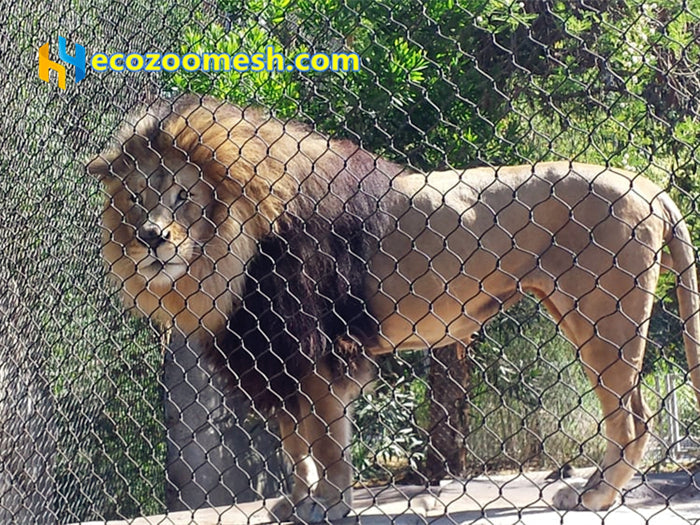
Stainless Steel Wire Rope Mesh: A Professional Fence Solution for Lion Enclosures & Zoo Habitats
In the realm of zoo design, wildlife conservation, and captive animal management, the selection of appropriate enclosure materials is a critical decision that directly impacts animal welfare, visitor safety, and long-term operational sustainability. Lions, as apex predators with considerable strength, agility, and territorial instincts, require enclosures that adhere to the highest standards of security, durability, and environmental compatibility. Traditional fencing materials—such as galvanized steel, chain-link, or solid barriers—often fail to meet these rigorous requirements, suffering from corrosion, structural weakness, or compromised visibility. As a result, stainless steel wire rope mesh has emerged as the premier choice for lion enclosure mesh, zoo mesh, and professional fence systems in modern zoos, wildlife parks, and conservation facilities worldwide.
This comprehensive article aims to explore the technical advantages, practical applications, and industry-leading benefits of stainless steel wire rope mesh as a fence solution for lion habitats. From its material composition and structural integrity to its compliance with global zoo standards and long-term cost-effectiveness, we will provide a detailed analysis to assist zoo administrators, wildlife architects, and facility managers in making informed decisions for their lion enclosure projects.

The Imperative of Specialized Fencing for Lion Enclosures
Lions (Panthera leo) are among the largest and most powerful terrestrial carnivores, with adult males weighing up to 250 kilograms and possessing jaw strength capable of exerting pressures exceeding 650 pounds per square inch. Their natural behaviors—including climbing, pouncing, and territorial marking—place unique demands on enclosure infrastructure. A professional lion enclosure mesh must address four core imperatives that standard fence materials cannot sufficiently fulfill:
1. Structural Security Against Predatory Forces
Lions are innately curious and may test enclosure boundaries through repeated physical contact, including pushing, clawing, and biting. A substandard fence risks deformation, breakage, or gap formation, creating escape hazards that threaten both animal and human safety. The ideal lion enclosure mesh must exhibit exceptional tensile strength and impact resistance to withstand these forces indefinitely.
2. Corrosion Resistance in Harsh Environments
Lion enclosures are exposed to a range of corrosive agents, including animal waste (rich in ammonia and uric acid), cleaning chemicals, precipitation, and humidity. Fencing materials prone to rust or degradation not only lose structural integrity over time but also pose health risks to lions through sharp, corroded edges or toxic material leaching.
3. Animal Welfare and Safety Compliance
Modern zoo ethics and global welfare standards (such as those established by the Association of Zoos and Aquariums [AZA], European Association of Zoos and Aquaria [EAZA], and World Association of Zoos and Aquariums [WAZA]) mandate enclosures that minimize stress and prevent injury. Fencing must feature smooth surfaces, appropriate gap sizes, and flexibility to avoid harming lions' paws, claws, or fur during interaction.
4. Aesthetic and Immersive Experience
Contemporary zoo design prioritizes immersive exhibits that replicate natural habitats, allowing visitors to observe lions in environments that promote their natural behaviors. A transparent, unobtrusive fence enhances visibility, facilitates natural light penetration, and supports airflow—all critical for maintaining the psychological and physical health of captive lions.
Stainless steel wire rope mesh addresses each of these imperatives, positioning it as the gold standard for professional lion enclosure and zoo mesh applications.
Technical Advantages of Stainless Steel Wire Rope Mesh for Lion Enclosures

Stainless steel wire rope mesh—engineered specifically for high-security animal enclosures—combines advanced material science with precision manufacturing to deliver unparalleled performance. Below are its key technical advantages over conventional fence materials:
1. Superior Tensile Strength and Impact Resistance
Constructed from high-grade stainless steel wires (typically 2.0mm to 3.2mm in diameter) woven into a square grid pattern, stainless steel wire rope mesh exhibits exceptional tensile strength (exceeding 1,500 MPa) and impact resistance. The interwoven design distributes force evenly across the mesh surface, preventing localized failure even when subjected to the full weight or momentum of a lion. Unlike galvanized steel or chain-link fence, which may snap at welds or weak points, stainless steel wire rope mesh maintains structural integrity under repeated stress, eliminating escape risks.
2. Exceptional Corrosion Resistance (304 vs. 316 Grades)
Stainless steel's corrosion resistance stems from its chromium content (minimum 10.5%), which forms a passive oxide layer on the material surface. This layer self-repairs when damaged, protecting the underlying steel from rust, pitting, or chemical degradation. For lion enclosures, two industry-standard grades are recommended:
304 Stainless Steel: Ideal for inland zoos or dry climates, offering robust resistance to moisture, animal waste, and standard cleaning agents. With a lifespan of 20–30 years, it provides cost-effective durability for most lion habitat applications.
316 Stainless Steel: Enhanced with molybdenum (2–3%), this grade delivers superior resistance to chloride corrosion—critical for coastal zoos, humid environments, or enclosures near saltwater features. It is the preferred choice for facilities requiring maximum longevity (30–50 years) in harsh conditions.
Both grades outperform galvanized steel, which relies on a thin zinc coating that degrades over time, requiring frequent maintenance or replacement.
3. Animal-Centric Design Compliance
Stainless steel wire rope mesh is engineered to meet global animal welfare standards, featuring:
Smooth, Rounded Edges: Wire ends are professionally finished to eliminate sharp points, preventing cuts, abrasions, or entanglement injuries to lions.
Optimized Mesh Openings: Standard gap sizes (2"x2", 2.4"x2.4", 3"x3", 3.6"x3.6", or 4"x4") are designed to prevent entrapment—small enough to avoid paw or head entanglement, yet large enough to maintain visibility and airflow.
Flexible Structure: Unlike rigid steel bars, the mesh's slight flexibility absorbs impact during lion interactions, reducing the risk of fractures or trauma.
These design elements ensure the enclosure is both secure and humane, aligning with modern zoo ethics and regulatory requirements.
4. Transparency, Ventilation, and Aesthetic Versatility
Stainless steel wire rope mesh offers near-transparent visibility, with an open area ratio of 80–90%, ensuring unobstructed views of lions for visitors while allowing natural light to penetrate the enclosure. This transparency supports the lions' circadian rhythms and promotes plant growth within the habitat, creating a more naturalistic environment. Additionally, the mesh's open structure facilitates optimal airflow, reducing moisture buildup, bacteria growth, and unpleasant odors—critical for maintaining a healthy habitat.
Aesthetically, the mesh is available in two professional finishes: natural stainless steel (a sleek silver tone that blends with outdoor surroundings) and black oxide (a durable, non-peeling finish that reduces glare and complements naturalistic exhibit designs). Both options enhance the enclosure's visual appeal without compromising performance.
5. Easy Installation and Low Long-Term Maintenance
Despite its exceptional strength, stainless steel wire rope mesh is lightweight compared to rigid steel fencing, simplifying transportation, handling, and installation. It can be customized to fit any enclosure shape or size—from small breeding pens to large, multi-acre habitats—without sacrificing structural integrity. Standard rolls (50'x16') are available for large-scale projects, while custom cutting minimizes waste and reduces installation time.
Maintenance requirements are minimal: the mesh requires no painting, coating, or regular treatments to preserve its corrosion resistance. Occasional cleaning with mild detergent and water is sufficient to remove dirt, debris, or animal waste, ensuring the fence remains in optimal condition for decades. This low-maintenance profile translates to significant cost savings over the enclosure's lifespan, allowing facilities to allocate resources to animal care and conservation initiatives.
Key Specifications for Lion Enclosure Mesh Selection

Selecting the appropriate stainless steel wire rope mesh for a lion enclosure requires careful consideration of technical specifications, aligned with the enclosure's purpose, environmental conditions, and lion population (adults vs. cubs). Below are the critical parameters to evaluate:
Mesh Size (Gap Dimensions)
2"x2" (51mmx51mm): Recommended for cub enclosures, breeding facilities, or secondary barriers. This size prevents young lions from getting their heads, paws, or claws stuck, minimizing injury risk.
3"x3" (76mmx76mm): The industry standard for adult lion enclosures. It balances security, visibility, and animal safety, preventing escape while ensuring lions cannot become entangled.
4"x4" (102mmx102mm): Suitable for large, open habitats or perimeter fencing, where weight reduction is a priority. This size maintains sufficient strength for adult lions while optimizing airflow and visibility.
Wire Diameter
2.0mm (3/32"): Lightweight yet durable, ideal for cub enclosures or internal partitions.
2.4mm (5/64"): Versatile for adult lion habitats, offering a balance of strength, flexibility, and cost-effectiveness.
3.2mm (1/8"): Heavy-duty for high-traffic areas, perimeter fencing, or enclosures housing particularly large or active lions. It provides maximum impact resistance and longevity.
Material Grade
304 Stainless Steel: Recommended for inland zoos, dry climates, or facilities with limited exposure to saltwater or harsh chemicals.
316 Stainless Steel: Mandatory for coastal zoos, humid environments, or enclosures near saltwater features. It is also preferred for long-term projects requiring minimal maintenance.
Customization Options
Reputable stainless steel wire rope mesh suppliers offer a range of customization services to meet project-specific needs, including:
Custom roll sizes and cutting to fit unique enclosure dimensions.
Black oxide coating for reduced glare and enhanced aesthetics.
Reinforced edges or border frames for additional structural support.
Compatibility with mounting systems (e.g., posts, cables, or concrete anchors) to ensure secure installation.
Compliance with Global Zoo Standards and Regulations
Stainless steel wire rope mesh meets or exceeds the strictest global standards for zoo enclosures, including those established by:
Association of Zoos and Aquariums (AZA): Requires enclosures to be "structurally sound, escape-proof, and designed to prevent injury to animals and visitors."
European Association of Zoos and Aquaria (EAZA): Mandates fencing materials that are "durable, non-toxic, and compatible with animal welfare."
World Association of Zoos and Aquariums (WAZA): Emphasizes the need for enclosures that "support natural behaviors while ensuring security."
By choosing stainless steel wire rope mesh, facilities demonstrate compliance with these regulations, reducing legal risks and enhancing their reputation as responsible animal care providers.

Case Study: Stainless Steel Wire Rope Mesh in Large-Scale Lion Enclosures
A prominent zoo in Central Europe recently upgraded its 5,000-square-meter lion enclosure from galvanized chain-link fence to 316 stainless steel wire rope mesh (3"x3" openings, 2.4mm wire diameter). The project objectives included improving animal welfare, enhancing visitor experience, and reducing long-term maintenance costs. The results, measured over two years, were significant:
Safety: Zero escape incidents or structural failures, despite repeated testing by the enclosure's four adult lions.
Animal Welfare: Increased natural behaviors (roaming, climbing, and social interaction) due to improved visibility and airflow.
Visitor Experience: A 45% increase in positive feedback, with visitors citing "unobstructed views" and "naturalistic habitat" as key benefits.
Maintenance: A 80% reduction in maintenance time and costs, as the mesh required no repainting, rust removal, or repairs.
This case study underscores the transformative impact of stainless steel wire rope mesh on lion enclosure functionality and sustainability.
Choosing a Reliable Supplier for Lion Enclosure Mesh
Selecting a reputable supplier is critical to ensuring the quality and performance of stainless steel wire rope mesh. Key factors to evaluate include:
Industry Experience: Look for suppliers with a proven track record in zoo mesh applications, preferably with references from recognized zoos or conservation facilities.
Material Quality: Verify that the supplier uses genuine 304 or 316 stainless steel, with certification of material composition.
Manufacturing Standards: Ensure the mesh is handwoven or machine-woven to precise specifications, with consistent gap sizes and smooth edges.
Technical Support: Choose a supplier that provides expert consultation on specifications, installation, and maintenance, as well as after-sales support.
Our stainless steel wire rope mesh meets all these criteria, with a decade of experience supplying zoo-grade fencing to facilities worldwide. We adhere to strict quality control protocols, using only certified stainless steel and precision manufacturing techniques to deliver products that exceed industry standards.
Conclusion: Investing in Long-Term Excellence for Lion Enclosures
Stainless steel wire rope mesh represents the pinnacle of fence technology for lion enclosures, offering a unique combination of security, durability, animal welfare compliance, and aesthetic versatility. Its technical advantages—superior strength, corrosion resistance, and low maintenance—make it a cost-effective investment for zoos and wildlife facilities seeking to balance operational efficiency with animal and visitor safety.
By choosing stainless steel wire rope mesh, facilities not only meet global zoo standards but also create habitats that support the physical and psychological health of lions, fostering a deeper connection between visitors and these magnificent creatures. As the demand for ethical, sustainable zoo design continues to grow, stainless steel wire rope mesh remains the professional choice for lion enclosure mesh and zoo mesh applications.
Request a Consultation for Your Lion Enclosure Project
We invite zoo administrators, wildlife architects, and facility managers to contact our team of experts for a personalized consultation. Whether you are designing a new lion enclosure or upgrading an existing facility, we will work with you to select the optimal stainless steel wire rope mesh specifications, provide detailed installation guidelines, and deliver a solution that meets your unique needs.
Contact us today to request a free quote, material sample, or technical specification sheet. Invest in the safety, welfare, and sustainability of your lion enclosure with the industry's premier fence solution.