

Tiger Fence Mesh: The Ultimate Solution for Safety, Durability, and Aesthetics
In the world of modern zoo design and wildlife conservation, the enclosure is much more than just a barrier. It is a critical infrastructure that balances three vital components: the safety of the public, the welfare of the animals, and the experience of the visitors. When it comes to housing powerful predators like tigers, the choice of materials is non-negotiable. This is where tiger fence mesh becomes the industry standard.
The most advanced and reliable material for this purpose is stainless steel wire rope mesh. In this comprehensive guide, we will explore why this specific mesh is the ultimate solution for tiger habitats and how it outperforms traditional fencing materials in every category.
What is Tiger Fence Mesh?
Tiger fence mesh refers to specialized, high-strength containment systems designed to withstand the immense power of big cats. Tigers are among the strongest and most agile predators on earth. They can leap over 10 feet vertically and exert thousands of pounds of pressure during a strike.
Unlike standard garden fencing or thin chicken wire, tiger fencing must be engineered with industrial-grade materials. The primary goal is to provide a "soft but strong" barrier that prevents escape while ensuring the animal does not injure itself upon contact with the fence.

The Superiority of Stainless Steel Wire Rope Mesh
The backbone of modern tiger enclosures is the stainless steel wire rope mesh. This material is crafted from high-quality stainless steel cables (usually AISI 304 or 316) that are either hand-woven or joined with steel ferrules.
But why is this material preferred over iron bars or chain-link fences? Let’s break down the technical reasons.
1. Unmatched Strength-to-Weight Ratio
Stainless steel cables are incredibly strong. A single 4.0mm cable can have a breaking strength of thousands of pounds. When these cables are woven into a mesh, the load is distributed across the entire surface. This allows the mesh to stop a charging tiger without snapping.
2. Flexibility and Impact Absorption
One of the dangers of rigid iron bars is that a tiger hitting them at full speed can suffer broken bones or internal injuries. Stainless steel wire rope mesh is flexible. It acts like a high-tech net, absorbing the kinetic energy of an impact and then returning to its original shape. This "resilience" is a key factor in animal welfare.
3. Corrosion Resistance for Decades
Zoos are outdoor environments exposed to rain, snow, and humidity. Traditional carbon steel fences rust within years, requiring expensive replacements. However, 316-grade stainless steel wire rope mesh contains molybdenum, which makes it highly resistant to corrosion and salt spray. It can easily last 30 to 50 years with minimal maintenance.
Enhancing the Visitor Experience: The "Invisible" Barrier
One of the biggest challenges for zoo architects is visibility. Visitors pay to see tigers, not a wall of thick steel bars. Traditional fencing creates a "caged" feeling that can be off-putting to modern audiences who value naturalistic exhibits.
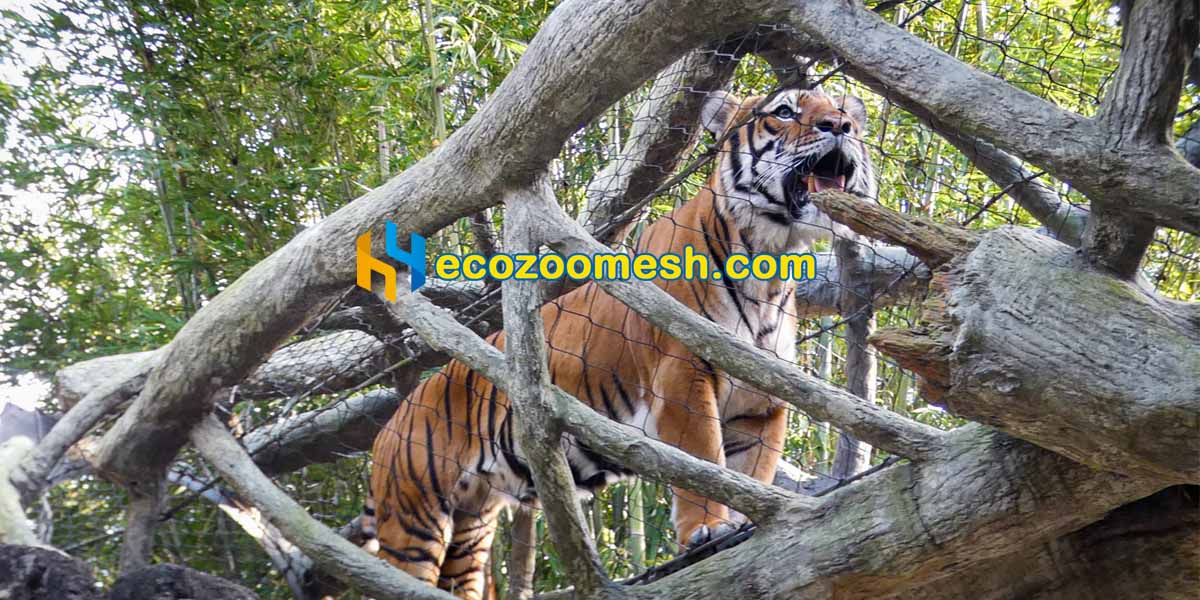
Tiger fence mesh provides a solution known as "transparency." Because the steel ropes are thin (typically 3.2mm to 4.0mm) and the mesh openings are relatively large (50mm to 100mm), the fence virtually disappears from the human eye at a distance. This allows for unobstructed photography and a much more immersive experience for guests. They feel closer to the animals, while remaining perfectly safe behind a high-strength barrier.
Technical Specifications: Choosing the Right Mesh
When ordering tiger fence mesh, it is essential to understand the specifications. Not all mesh is created equal. For a Shopify merchant or a zoo contractor, providing these details is crucial for a successful installation.

Rope Diameter
- 3.2mm (1/8"): Ideal for younger tigers or medium-sized cats like leopards and cougars.
- 4.0mm (5/32"): The heavy-duty standard for adult tigers, lions, and other large predators.
Mesh Aperture (Opening Size)
- 50mm x 50mm (2" x 2"): Used for smaller cats or to prevent young cubs from reaching through.
- 80mm x 80mm to 100mm x 100mm: The most popular choice for adult tiger exhibits, offering the best balance between strength and visibility.
Material Grade
- AISI 304: Suitable for inland zoos with mild climates.
- AISI 316: Mandatory for coastal areas or high-humidity tropical environments where corrosion is a major risk

Installation and Structural Integrity
The safety of a tiger fence mesh system is only as good as its installation. Because the mesh is flexible, it must be tensioned correctly across a rigid frame.
Supporting Structure
The perimeter posts must be made of heavy-wall steel tubing or reinforced concrete. These posts must be deep-set into the ground to withstand the tension of the mesh and the potential impact of an animal.
Perimeter Cable
To secure the mesh, a thicker "perimeter cable" is usually run through the edges of the mesh and anchored to the posts. This ensures there are no gaps or weak points where a tiger could attempt to squeeze through.
Customization
One of the best features of stainless steel wire rope mesh is its ability to adapt to any shape. Whether your exhibit is a flat wall, a curved tunnel, or a 3D dome, the mesh can be cut and sewed to fit the specific geometry of the site.
Animal Welfare Benefits
Beyond safety, we must consider the tiger's health. Traditional galvanized fences can sometimes flake off zinc, which is toxic if ingested. Stainless steel wire rope mesh is non-toxic and environmentally friendly. It does not harbor bacteria or mold, and it is easy to clean with a simple pressure washer.
Furthermore, the smooth surface of the cables prevents "snagging." Tigers often rub against their fences; stainless steel ensures their fur and skin remain undamaged.
Long-term Cost Analysis: An Investment that Pays Off
Many zoo operators are initially hesitant about the price of stainless steel wire rope mesh compared to cheaper chain-link options. However, a long-term cost analysis tells a different story.
- Replacement Costs: Chain-link fences often need replacement every 5–10 years due to rust or sagging. Stainless steel lasts 30+ years.
- Maintenance: No painting, no rust-proofing, and no specialized coatings are required.
- Liability: The superior strength reduces the risk of expensive insurance claims or public safety incidents.
When you factor in these elements, the "expensive" stainless steel option is actually the most economical choice over the life of the exhibit.
The Future of Zoo Enclosures
As global standards for animal welfare continue to rise, the demand for "open" and "natural" exhibits will grow. Tiger fence mesh is the technology that makes this possible. It allows us to protect these magnificent creatures while educating the public in a way that feels respectful and unconfined.
By choosing stainless steel wire rope mesh, you are not just buying a fence; you are investing in a sustainable, safe, and beautiful future for wildlife conservation.
