

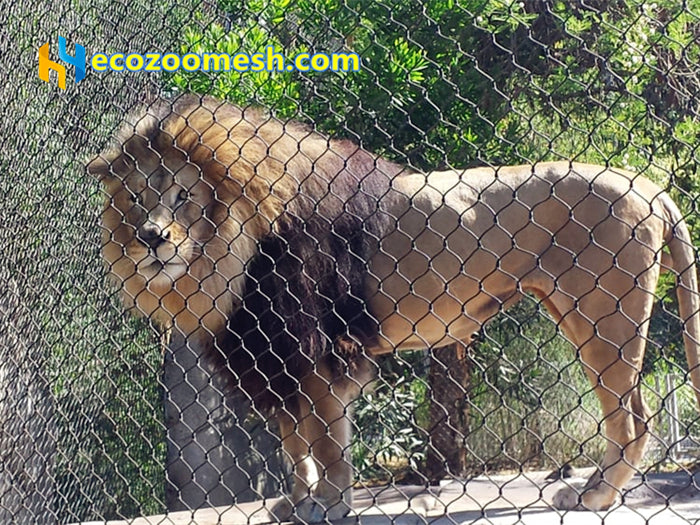
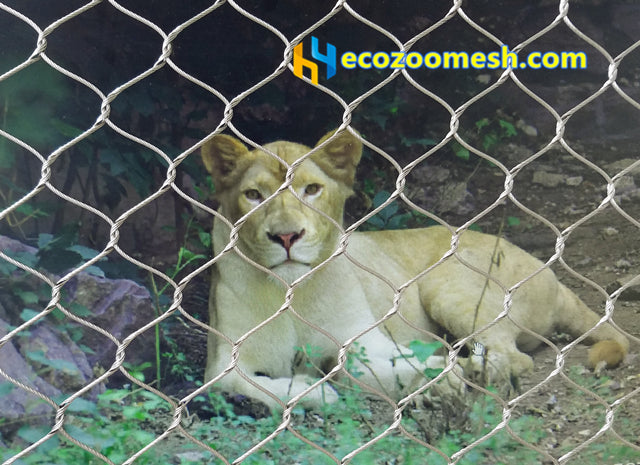
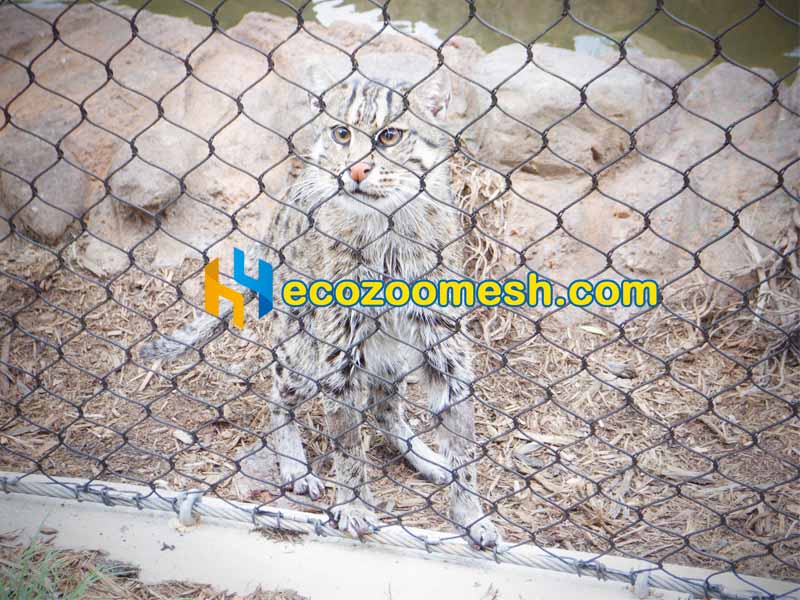
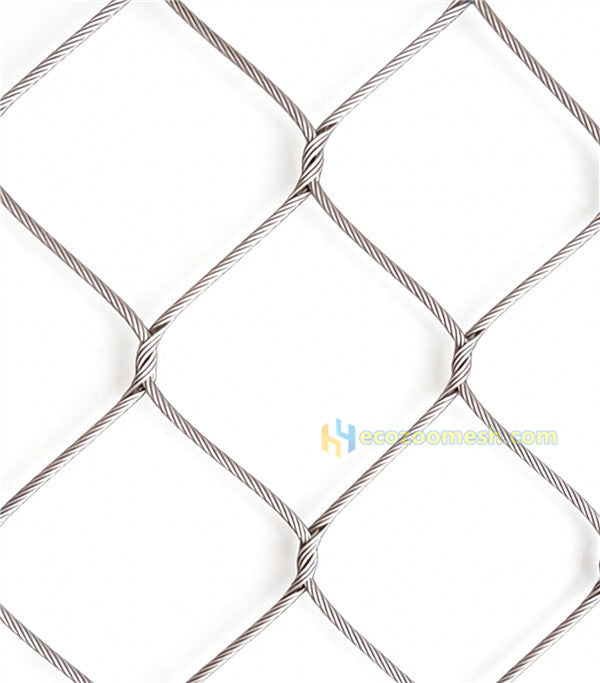





Ferrule Wire Rope Mesh for Monkey Enclosure - 50' x 16' mesh roll
Product Type: ferrule mesh
SKU: HYF1640
Please confirm with us before ordering. Unconfirmed orders will not be processed.
Share
Guaranteed Safe Checkout
Why Stainless Steel Cable Mesh is Ideal for Monkeys
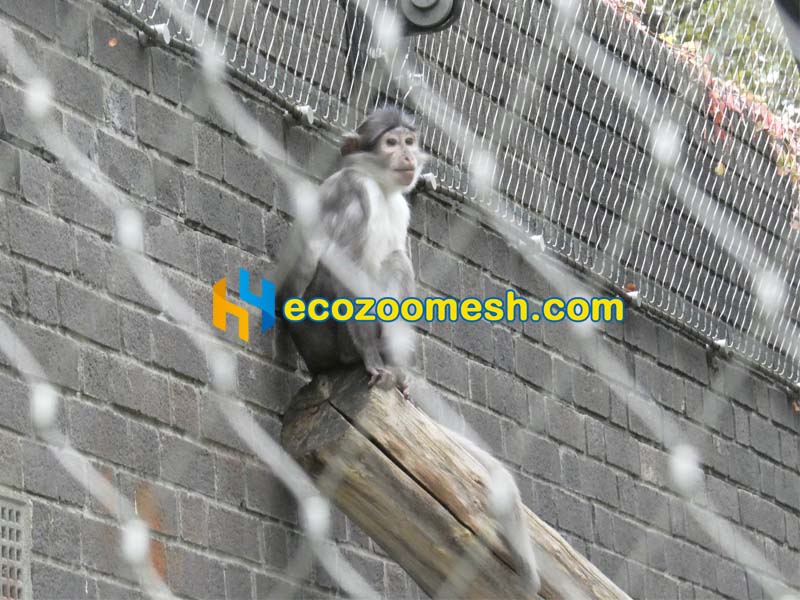
Monkeys are intelligent, agile, and often mischievous animals. This makes them one of the most challenging species to safely contain. The right enclosure must balance three critical needs:
- Security – The material must withstand climbing, pulling, chewing, and other stresses caused by active primates.
- Animal Welfare – Enclosures should feel open and natural, allowing plenty of light, airflow, and visibility.
- Longevity – Outdoor habitats are exposed to rain, sun, and temperature changes, so the material must resist rust, corrosion, and wear.
Stainless steel cable mesh meets all three requirements. Its interwoven or ferruled stainless steel wires form a flexible yet incredibly strong barrier. The mesh is smooth to the touch, protecting monkeys from injury, and its transparency creates a more natural environment compared to bulky bars or rigid wire fencing.
Types of Stainless Steel Mesh for Monkey Enclosures
1. Woven Cable Mesh
- Made by hand-weaving stainless steel cables into a diamond pattern.
- Highly flexible, lightweight, and durable.
- Provides excellent resistance against pulling and impact.
- The diamond aperture size can be customized depending on monkey species and enclosure design.
2. Ferrule Cable Mesh
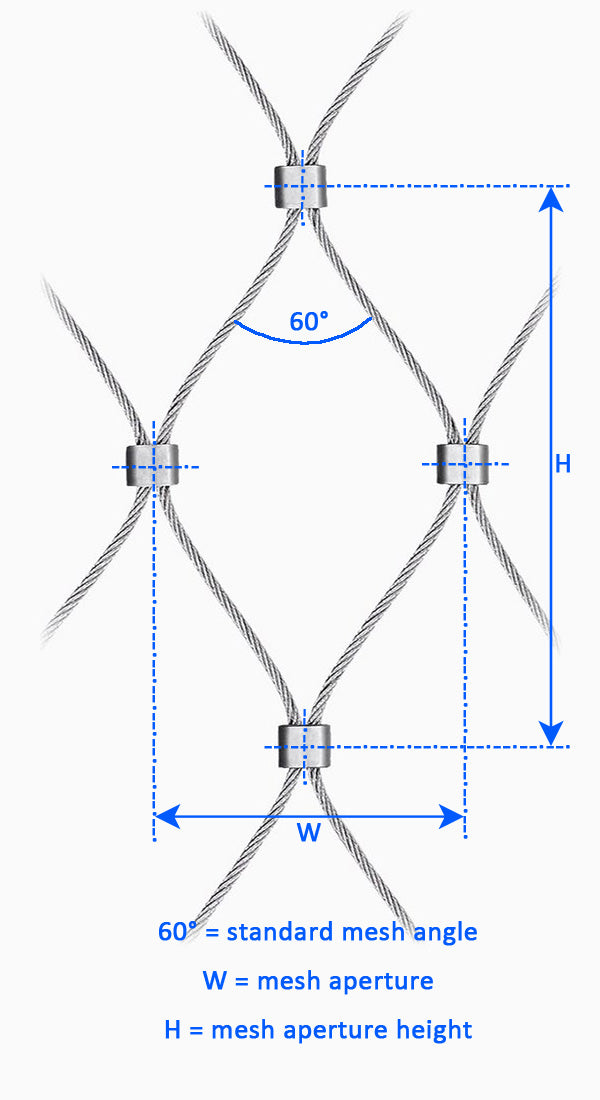
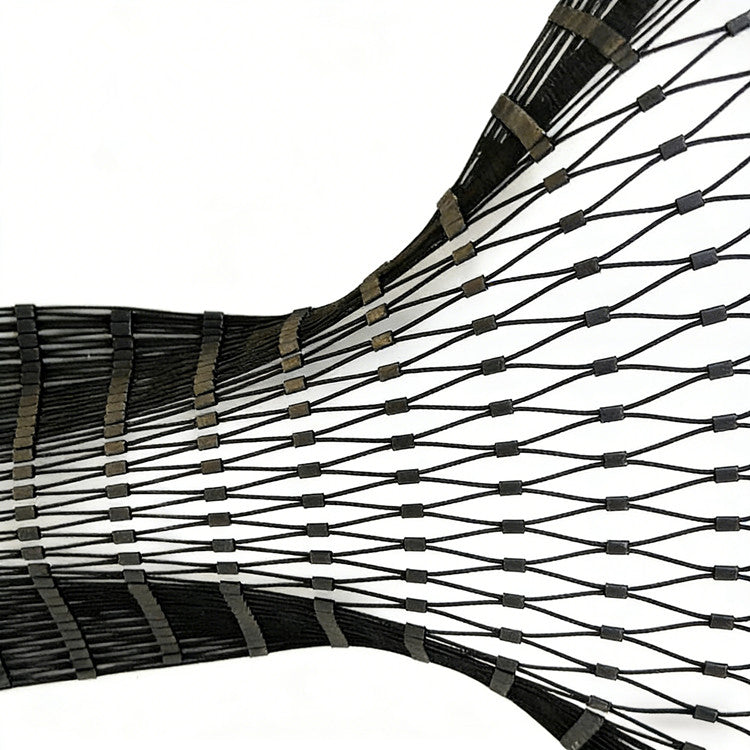
- Connected using stainless steel ferrules that clamp the cables into place.
- Creates a uniform, modern appearance.
- Slightly stiffer than woven mesh, making it easier to install in large panels.
- Popular in modern zoo architecture and large-scale projects.
3. Tunnel Mesh for Monkey Enclosures
- A newer application that uses woven or ferrule stainless steel mesh to create elevated tunnels.
- Allows monkeys to move between different areas safely, often above visitor pathways.
- Increases enrichment for the animals by offering new climbing and exploring opportunities.
- Gives visitors a unique viewing experience.


Stainless steel cable mesh is including two types:
1> Stainless steel cable woven mesh (stainless steel sleeveless wire rope mesh)
2>Stainless steel cable ferrule mesh (stainless steel sleeved wire rope mesh).
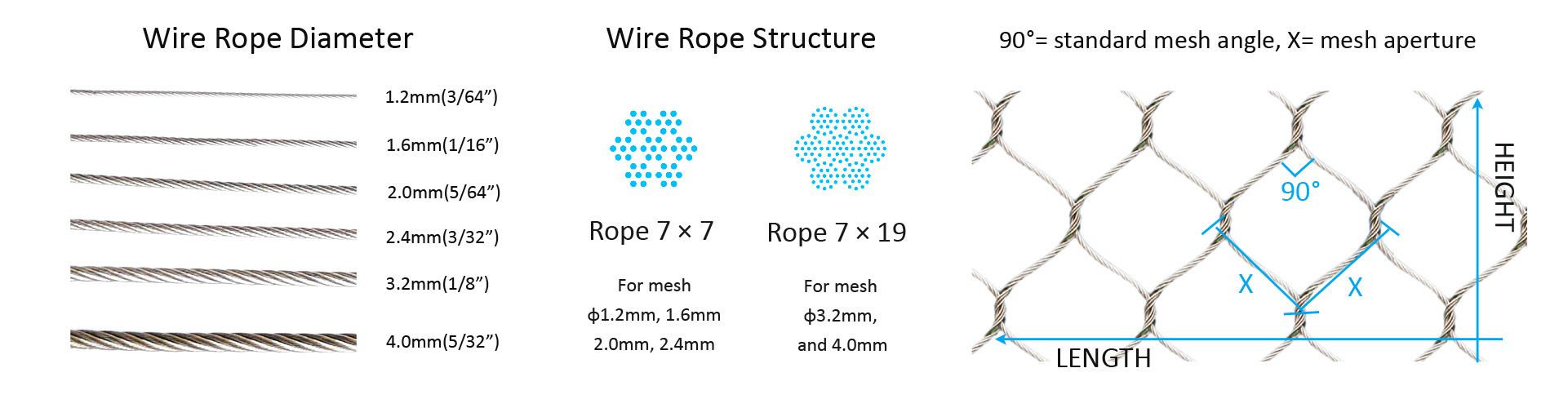
How to choose the right mesh? Check our quick sizing guide to find the perfect safety solution for your enclosure project

Specifications of Stainless steel cable woven mesh:
| Rope diameter | 3/64"(1.2mm) | 1/16"(1.6mm) | 5/64"(2.0mm) | 3/32"(2.4mm) | 1/8"(3.2mm) | 5/32"(4.0mm) |
| Mesh aperture | --- | --- | --- | --- | --- | --- |
| 0.8"×0.8" | HY1220 | --- | --- | --- | --- | --- |
| 1"×1" | HY1225 | HY1625 | --- | --- | --- | --- |
| 1.2"×1.2" | HY1230 | HY1630 | --- | --- | --- | --- |
| 1.5"×1.5" | HY1238 | HY1638 | HY2038 | HY2438 | --- | --- |
| 2"×2" | HY1251 | HY1651 | HY2051 | HY2451 | HY3251 | --- |
| 2.4"×2.4" | HY1260 | HY1660 | HY2060 | HY2460 | HY3260 | --- |
| 3"×3" | HY1276 | HY1676 | HY2076 | HY2476 | HY3276 | HY4076 |
| 3.6"×3.6" | HY1290 | HY1690 | HY2090 | HY2490 | HY3290 | HY4090 |
| 4"×4" | HY12102 | HY16102 | HY20102 | HY24102 | HY32102 | HY40102 |
Specifications of Stainless steel cable ferrule mesh:
| Rope diameter | 3/64"(1.2mm) | 1/16"(1.6mm) | 5/64"(2.0mm) | 3/32"(2.4mm) | 1/8"(3.2mm) | 5/32"(4.0mm) |
| Mesh aperture(mm) | --- | --- | --- | --- | --- | --- |
| 20×35 | HYF1220 | --- | --- | --- | --- | --- |
| 30×52 | HYF1230 | HYF1630 | --- | --- | --- | --- |
| 40×69 | HYF1240 | HYF1640 | --- | --- | --- | --- |
| 50×87 | HYF1250 | HYF1650 | HYF2050 | --- | --- | --- |
| 60×104 | HYF1260 | HYF1660 | HYF2060 | HYF2460 | HYF3260 | HYF4060 |
| 80×139 | HYF1280 | HYF1680 | HYF2080 | HYF2480 | HYF3280 | HYF4080 |
| 100×173 | HYF12100 | HYF16100 | HYF20100 | HYF24100 | HYF32100 | HYF40100 |
| 120×208 | HYF12120 | HYF16120 | HYF20120 | HYF24120 | HYF32120 | HYF40120 |
| 150×260 | HYF12150 | HYF16150 | HYF20150 | HYF24150 | HYF32150 | HYF40150 |
It is always our pursuit to provide perfect service!
1. Contact us. We will confirm the raw materials with you according to the application environment. 304 stainless steel is suitable for most cases; 316 stainless steel is better in corrosion-resistant and suitable for oceanic climate.
2. We will confirm the specifications and sizes and give you the most reasonable proposal according to the application purpose.
3. Our salespersons will confirm with you the prices, delivery date, and shipment method, etc.
4. Before placing an order, you are suggested to request a sample of the selected specification. The sample is free and we guarantee the final product is consistent with this sample.
5. Confirm the order and make the down payment.
6. We will produce with a plan.
7. You can come to inspect the products after production is completed; then we will demand the balance and arrange shipment according to your requirement.
8. 7*24 after-sales consultation.
9. Regular post-sales contacts. Your suggestions are welcome and will be helpful for us to enhance our products and services.
Flexible Transportation
The company of express can be chosed like: FedEx, DHL, TNT, or UPS. We also accept the freight collect.Our nearest sea port: XINGANG PORT, TIANJIN, CHINAOur nearest air port: BEIJING, CHINA
